
Rabatec
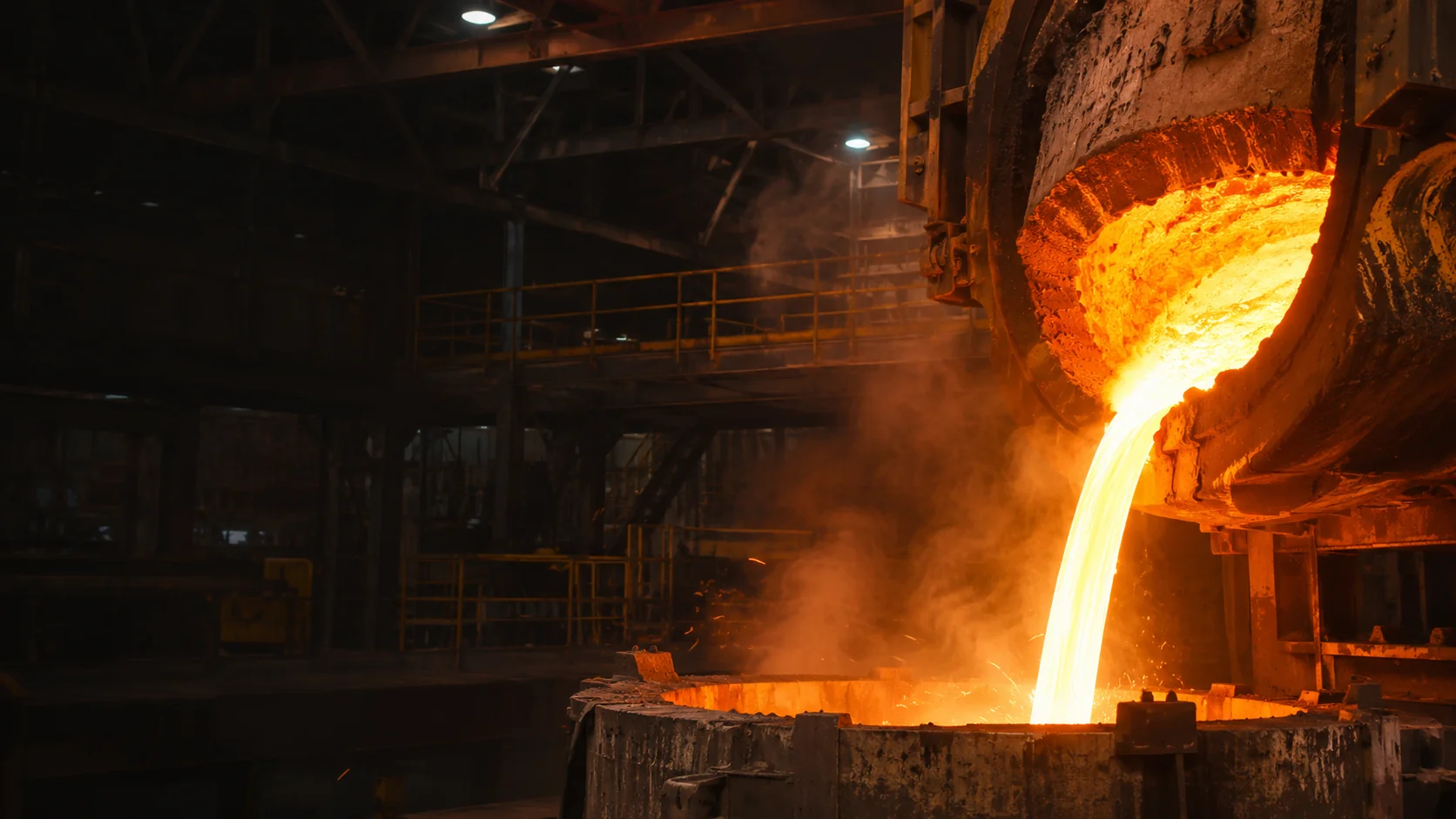
Molten metal pouring from a furnace into a refractory-lined vessel

Furnace asset management

Furnace investment.
Operating performance.

We work on site with operators and maintenance crews, from the first repair-or-reline decision through commissioning and daily operation. Together we put refractory practices to work on each shift and track what they change in campaign life, availability and cost per tonne.

Services

Furnace lifecycle services and applied R&D

Led by Yassine Douche, M.A.Sc. Meet your project lead

Capital projects and operating assets

For a single furnace or a fleet, we connect the investment case to maintenance decisions. The expected campaign life, availability and outage cost used to approve a project become reference points for the operating team.

Discuss a furnace project

CAPEX | Feasibility through commissioning

Feasibility and capital prioritization

Compare repair, reline and replacement against asset condition, outage windows and production demand. Test how campaign life, downtime and installation cost affect the return.

You receive a ranked capital plan and a comparison of lifecycle cost, payback assumptions and the risks that could change the decision.

Furnace and lining design review

Review drawings against duty, geometry, bath and slag exposure, insulation, joints, anchoring, access and maintainability. Identify the interfaces that need resolution before procurement.

You receive a marked-up design review, open-issues register and acceptance criteria for each critical zone.

Heat-transfer simulation

Compare lining options at steady state and through heat-up or cooling. Use agreed conductivity data, geometry, boundary conditions and operating history. Check how uncertainty affects the result.

You receive predicted shell temperatures, heat loss and temperature profiles by zone, with assumptions, sensitivities and a recommendation on thickness or insulation.

Refractory selection and qualification

Match the working lining, backup and insulation to chemical attack, abrasion, thermal cycling and installation constraints. Compare candidate grades against the material already in service.

You receive a zone-by-zone material schedule, technical specifications and a qualification plan for substitutions.

Manufacturer negotiation and procurement

Prepare the technical RFQ, normalize supplier bids and support negotiations on grade equivalence, inspection, lead times, traceability and warranty terms. Your team approves the commercial award.

You receive a comparable bid sheet, documented exceptions and a negotiation brief showing price, delivery and lifecycle trade-offs.

Installation, commissioning and handover

Agree inspection hold points with the contractor. Document installation, curing and dry-out, then verify start-up conditions against the acceptance criteria with the site team.

You receive an inspection record, a list of outstanding items and a commissioning baseline for the operating team.

OPEX | Maintenance, cost and performance indicators

Operating cost and KPI management

Track refractory cost per tonne, furnace availability, energy per tonne and campaign life against the investment case. Review deviations with operations and maintenance before attributing a change to the lining.

You receive a site scorecard with baselines, review intervals and triggers for inspection, repair or reline planning.

Campaign monitoring and failure analysis

Map wear and hot spots by zone. Reconcile repair history and operating events with visual inspections, thermal surveys and post-mortem samples. Identify the evidence that would distinguish likely causes.

You receive a condition baseline, an inspection schedule and a repair, reline or operating recommendation with its limits.

Metallurgical analysis and operating trials

Reconstruct heats from plant records, feed, slag and metal assays. Investigate foaming, endpoint control, losses, energy use and lining attack. Compare operating changes under agreed constraints.

You receive a process baseline and mass or energy balance where data permit, followed by a trial plan with sampling points, success measures and stop criteria.

On-site operator training and furnace rounds

Join crews on their rounds. Ask where wear first appears and what gets missed at shift change. Use examples from their own furnace to practise recognizing deterioration, recording it consistently and knowing when to call maintenance.

You receive a shift checklist written with operators, photographs of site examples and a handover exercise for crew leads.

Putting refractory practices into daily use

Choose one recurring issue with operators and supervisors. Trial a change on one shift, hear what made it easier or harder, and coach the other crews on the agreed practice. Compare wear and downtime under similar operating conditions.

You receive a site-approved work instruction, a named owner and a follow-up review to decide whether to keep, adapt or stop the change.

When is a full reline worth the outage?

Compare a targeted repair with a full reline using site costs, outage hours and expected tonnes before the next intervention. At commissioning, record the lining condition and the assumptions behind the choice. Revisit the decision with actual wear, unplanned downtime and cost per tonne before committing the next round of capital.
Applied R&D and industrial testing

We design comparative studies, coordinate specialist testing and interpret the findings against your decision criteria. After qualification, your proposal identifies the instrument, specimen preparation, test conditions, responsible team, timing and price.

Discuss a research project

Testing catalogue

Find a test by industrial need

We arrange these tests with specialist facilities. Before quoting, we confirm the instrument, specimen requirements and achievable measurement limits for your application.

Failure analysis and material identificationWhy did the lining or component deteriorate?

Bring a used sample, its orientation and service history, plus an unused reference if available.

Fracture and reaction-zone mapping

Hitachi SU-8230 field-emission SEM with Bruker XFlash EDS

Micrographs and elemental maps showing how a damaged region differs from a reference.

Crystalline phase identification

PANalytical X’Pert PRO X-ray diffractometer (XRD)

Diffraction patterns and identified crystalline phases in deposits, starting material or reaction products.

Refractory–slag penetration comparison (custom study)

Controlled-atmosphere tube furnace and polished-section microscopy

A comparison of penetration depths and reaction zones for candidate linings at the agreed temperature and exposure time.

Mechanical and high-temperature performanceWhich material withstands the specified load or heat cycle?

Specify the alloy or material, specimen geometry, expected load and thermal history.

Tension and compression

200 kN universal test frame

Load–displacement or stress–strain curves and agreed strength measures for comparable specimens.

Hot deformation

Gleeble 3800 thermomechanical simulator

Flow stress versus strain for selected temperatures and strain rates to compare forming conditions.

Dilatometry

DIL805 A/D dilatometer

Dimensional change through heating and cooling, including detectable transformation intervals.

Thermogravimetry and differential thermal analysis

Combined DTA/TGA system

Mass change and thermal events as a function of temperature under the agreed atmosphere.

Dimensional inspection and internal defectsIs the part within tolerance, and are hidden defects present?

Provide the drawing or CAD, the datum scheme, tolerance and smallest feature of interest.

Coordinate inspection

Mitutoyo Bright Strato 7106 coordinate measuring machine (CMM)

Measured feature positions and dimensional deviations relative to the drawing datums.

Surface roughness

Mitutoyo SJ400 contact profilometer

A surface trace and specified roughness parameters for the functional surface.

Nondestructive internal inspection

Nikon XT H 225 X-ray micro-CT system

Reconstructed sections and internal void distribution, subject to part size, density and achievable resolution.

Powder and polymer processingWill a new batch or formulation process consistently?

Supply matched lots and the processing conditions that matter for comparison.

Powder flow

Freeman FT4 powder rheometer

Relative flow-energy results under a defined conditioning sequence for comparing powder lots.

Melt rheology

Rotational and capillary rheometers

Viscosity versus shear rate or frequency for comparing processing windows.

Formulation trials

Extruders and an injection-moulding machine

Trial specimens and a record of processing conditions for follow-up dimensional or mechanical comparison.

Noise and acoustic insulationWhich panel or enclosure treatment reduces noise in the target band?

Identify the frequency band, material thickness and whether the concern is absorption or transmission.

Absorption and transmission

Normal-incidence impedance tubes

Frequency-dependent absorption coefficients or transmission loss for material specimens.

Enclosure leakage mapping

Coupled acoustic chambers and I-Track sound-intensity probe

A map identifying dominant sound-transmission paths and candidate modifications.

Thermal insulation and energy useWhere is energy being lost and which insulation option helps?

Define the material state, service temperature or electrical duty cycle.

Thermal conductivity

C-Therm Trident thermal conductivity analyzer

Conductivity values for suitable samples over an agreed temperature range.

Assembly thermal resistance

Calibrated hot box and FluxTeq PHFS-09e heat-flux sensors

Heat-flow data and a thermal resistance comparison for wall or insulation assemblies.

Electrical load profile

Fluke 1730 three-phase energy logger

A time-resolved demand and energy profile across representative operating cycles.

Electronics and functional coatingsDoes the prototype meet its electrical or coating specification?

Describe the substrate, film, desired response and usable measurement area.

Sheet resistance

Four-point probe

Sheet resistance of a suitable conductive film for comparing lots or deposition settings.

Surface and film step height

Ambios XP-200 stylus profilometer

A surface-height trace and step-height measurement across a prepared film edge.

RF component response

E5061 vector network analyzer

Reflection and transmission versus frequency for a compatible component and fixture.

Pavement and aggregate durabilityHow will a change in mix, binder or aggregate affect performance?

Identify the mix, reference material, conditioning temperature and service concern.

Rutting susceptibility

MLPC wheel tracker

Rut depth against loading cycles for comparing compacted mixes.

Low-temperature binder response

Cannon TE-BBR bending beam rheometer

Creep stiffness under specified temperature and loading conditions.

Aggregate wear

Micro-Deval abrasion apparatus

Mass loss after a controlled abrasion cycle for comparing aggregates.

Rock and soil behaviourWhat strength or shear behaviour should guide material selection?

Document sample orientation, moisture condition, specimen dimensions and relevant load.

Rock discontinuity shear

GCTS RDS-200XL direct-shear machine

Shear stress–displacement response under agreed normal loading.

Rock compression

Uniaxial compression press

Unconfined compressive strength of prepared rock cores.

Soil or granular material shear

100 × 100 mm direct-shear box

Peak shear resistance at selected normal stresses for the specified material condition.

From bench test to plant trial

If a new lining grade looks promising, we can compare it with the incumbent under agreed exposure conditions, document the reaction zone and rank the candidates. Before a plant trial, we agree on the operating limits, measurements and stop criteria with your team.

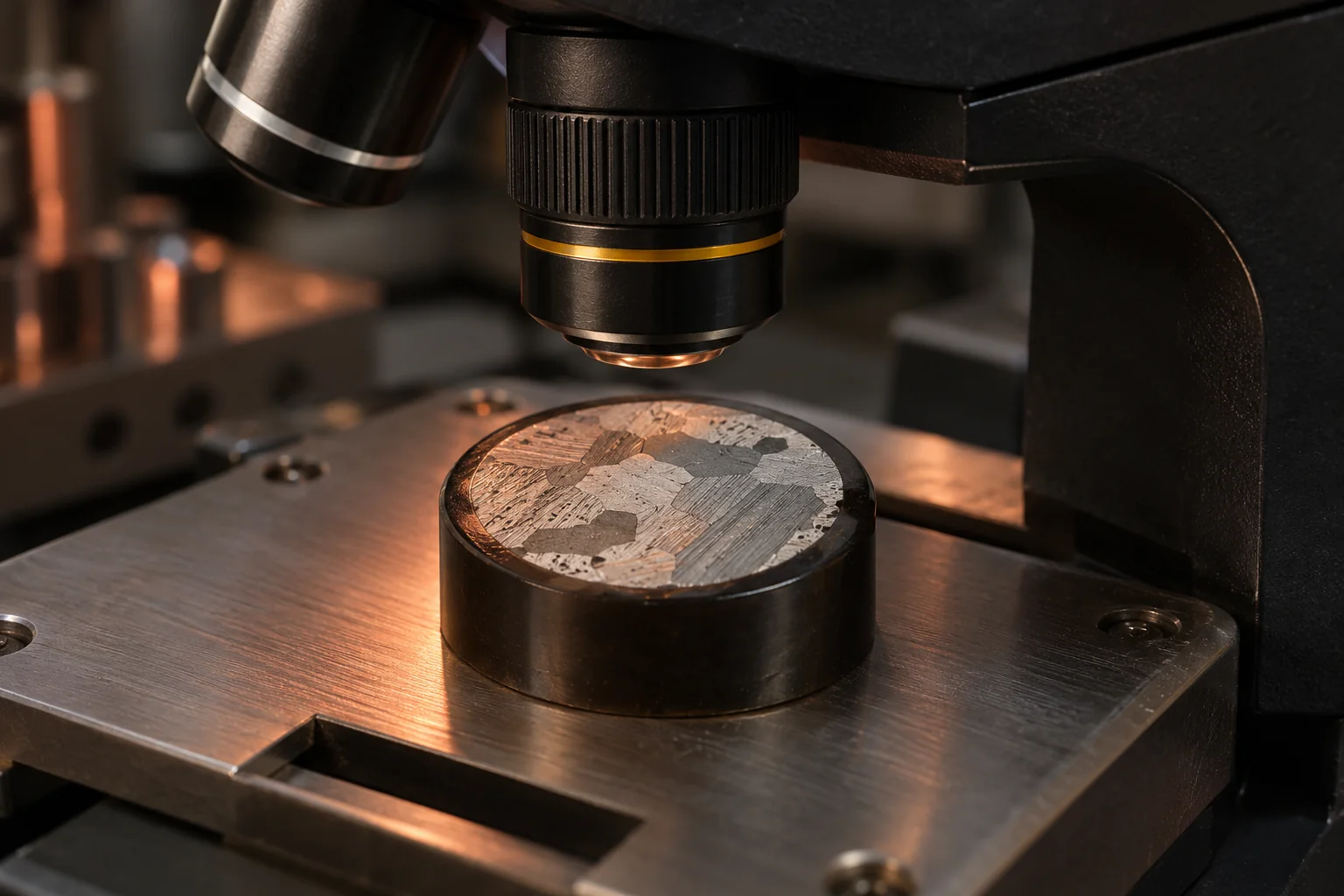
A polished material sample positioned under a laboratory microscope
Materials characterization

Our approach

From a plant question
to a technical decision

  1. Define the decision

    We agree on the asset or material, the evidence available and what would justify a change.

  2. Scope and price the work

    We confirm the method, responsibilities, schedule and outside costs. You review a written proposal before the work begins.

  3. Deliver the findings

    You receive the agreed records or test results, an interpretation of what they establish, and the next action we recommend.

Your project lead

Yassine Douche

Yassine brings 20 years of industrial technical and commercial experience. He has led a North American refractory portfolio supporting aluminum, copper, nickel and lead operations. His field work includes smelter operating reviews, refractory selection, supplier negotiations, installation quality assessments and post-mortem investigations.

He holds a Master of Applied Science in Metallurgical Engineering. His master’s research examined the impact resistance of aluminosilicate refractory castables. He is a PhD candidate in Mechanical Engineering. His research examines refractory wear in nickel smelting and converting, and how to control slag foaming during carbon reduction in nickel converters.

On a plant assignment, Yassine starts with the people who run the furnace. During rounds and shift handovers, he asks operators to show him what they see, tests proposed changes against the realities of the job and teaches the agreed practice alongside crew leads. Where the cause of wear is unclear, he scopes targeted testing and brings the findings back to the crew.

Qualifications and research

API 936 Refractory Personnel

Certified through August 31, 2028.

Verify API credential ↗
Lean Six Sigma Black Belt

Issued by Six Sigma Global Institute.

Verify Black Belt credential ↗
M.A.Sc. in Metallurgical Engineering

Research on impact damage in refractory castables.

View the published thesis record ↗

Project inquiries

What decision is
your team facing?

Start with a short, non-confidential description of your asset, process or test requirement and the decision date.

Project inquiry

Tell us about your project

This prepares an email to Rabatec in your email app. A non-confidential summary is enough.

Email info@rabatec.ca directly