Blog Rabatec
Slag’s Role in EAF: A Scientific Look at Maximizing Yield and Minimizing Cost

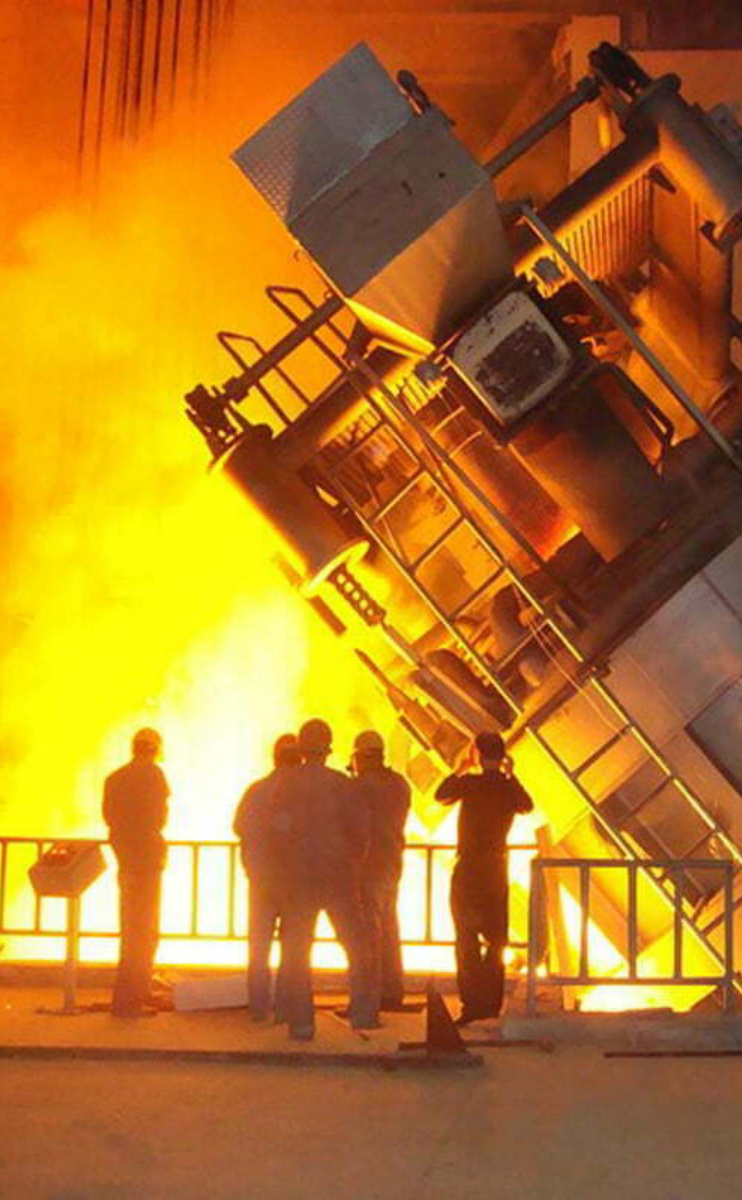
Electric Arc Furnace (EAF) and Slag Control
The Electric Arc Furnace (EAF) is the heartbeat of modern steel recycling, producing steel quickly and efficiently. However, the true mastery of EAF operation lies not just in the electricity, but in the thick, often misunderstood layer floating atop the molten steel: slag.
Slag is far more than just waste; it is a critical reaction medium, a chemical sponge, and a thermal blanket. Understanding its scientific role is the single most effective way to maximize metallic yield, ensure product quality, and significantly reduce operating costs—from electricity consumption to refractory wear.
The Science of Slag: Chemistry and Function
In the EAF, slag is a molten oxide solution primarily composed of CaO (lime), SiO₂ (silica), MgO (magnesia), FeO (iron oxide), and Al₂O₃ (alumina). The composition is dynamic, changing rapidly as fluxing agents are added, steel is refined, and electrodes heat the bath.
1. Primary Functions of EAF Slag
| Function | Scientific Mechanism | Impact on Cost/Yield |
|---|---|---|
| Refining & Purification | Slag acts as a chemical sink, transferring impurity elements (P, S) from the metal phase to the oxide phase, facilitated by high basicity and temperature. | Improves steel quality and reduces the need for secondary refining. |
| Thermal Protection | The slag layer insulates the bath, preventing excessive heat loss and protecting the refractory linings (like MgO-C Basic Refractory Bricks) from the intense heat of the arc. | Reduces energy consumption and extends the life of the furnace walls. |
| Arc Stabilization | The slag covers the arc, dampening acoustic noise and shielding electrodes from the oxidizing atmosphere, leading to steadier power input. | Improves electrical efficiency and reduces electrode consumption. |
| Controlling Foaming | Slag acts as a medium for gas bubbles (CO and CO₂) generated by carbon injection, creating a protective foam. | Maximizes energy transfer from the arc to the metal, increasing melt speed. |
Maximizing Yield: The FeO Challenge
The most direct link between slag control and cost minimization is managing Iron Oxide (FeO) content. FeO is essential for promoting carbon removal (C + FeO → Fe + CO), but excessive FeO directly translates to metallic yield loss.
The FeO Reaction and Yield Loss
Iron oxide forms readily during the oxygen blowing stage of the EAF:
Fe + ½ O₂ → FeO
This FeO is absorbed into the slag. If the slag becomes too oxidizing (high FeO), it can hold a significant amount of the metallic charge, directly reducing the final steel output. A 1% reduction in slag FeO can often equate to a significant increase in metallic yield.
Slag Foaming and Carbon Injection
The solution to high FeO is controlled slag foaming, achieved by injecting carbon into the slag layer:
FeO (in slag) + C (injected) → Fe (metal) + CO (gas)
- Yield Recovery: This reaction reduces FeO back to metallic iron, chemically recovering iron lost to the slag.
- Foam Generation: The resulting CO gas expands the slag volume, creating a stable foam that fully submerges the arc.
- Thermal Efficiency: The foam redirects the arc's intense radiant heat down into the metal bath, dramatically increasing energy transfer efficiency and protecting the refractory from the arc's heat.
Minimizing Cost: Basicity, Saturation, and Refractory Life
Controlling slag composition is vital for minimizing non-metallic operating costs, especially refractory wear and flux consumption.
1. Basicity (The Chemical Balance)
Slag basicity (B) is the single most important parameter. It's typically expressed as the ratio of basic oxides to acidic oxides, often approximated by the V-ratio:
B = (CaO + MgO) / (SiO₂ + Al₂O₃)
- Optimal Basicity (usually 1.8 to 2.5): High basicity is required to effectively remove phosphorus (P) and sulfur (S). If the slag is too acidic (B < 1.8), these impurities revert back into the steel bath.
- Refractory Corrosion: The lining of an EAF is typically Basic Refractory Bricks (MgO-C). If the slag is too far from saturation with MgO, the slag will aggressively leach MgO out of the furnace walls, dissolving the refractory and accelerating wear.
2. MgO Saturation
To prevent premature refractory failure, MgO saturation of the slag is managed by adding dolomitic lime. Adding sufficient MgO ensures the slag is chemically "full" of magnesia, preventing it from attacking the furnace lining.
3. Slag Volume and Tapping
Excessive slag volume requires more energy to heat and manage. It also increases the potential for undesirable elements to revert to the steel.
- Continuous Slag Raking: Modern EAF operations minimize slag volume by continuously raking slag off the bath to remove impurities and control chemistry.
- Minimizing Carry-Over: Preventing EAF slag carry-over during tapping is crucial, as this dirty, high-FeO slag can severely compromise clean steel processing in the ladle.
Conclusion: The Master Variable
Slag is the master variable in EAF operations. Its controlled formation and precise manipulation allow operators to execute necessary refining reactions while simultaneously protecting the furnace and optimizing energy usage. By scientifically controlling basicity, maintaining MgO saturation, and managing FeO through controlled slag foaming, steelmakers directly:
- Maximize Yield: Recovering iron units from the slag.
- Minimize Cost: Extending refractory life and reducing electrical consumption.
The best operators view slag not as a necessary evil, but as an indispensable tool for achieving the highest quality and most cost-effective steel production.