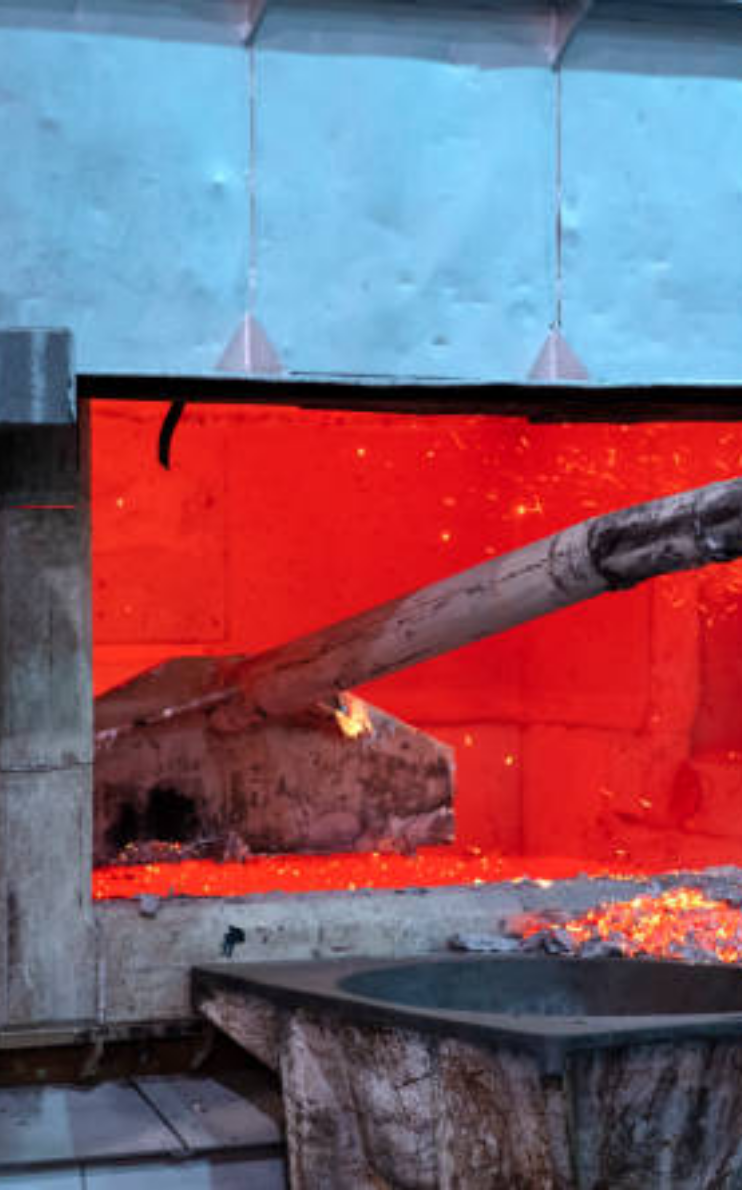
The biggest challenge in aluminum recycling is controlling dross, the undesirable mixture of molten aluminum metal, aluminum oxide (Al₂O₃), and entrapped flux that forms rapidly on the surface of the melt. Managing dross is crucial because it directly impacts metallic yield and operational efficiency. Material science is addressing this challenge through innovative refractory and equipment design to minimize dross formation and maximize metal recovery.
1. The Challenge: Why Dross Impacts Yield and Cost
Dross forms when molten aluminum reacts immediately with oxygen in the air:
4Al + 3O₂ → 2Al₂O₃.
The problem is compounded by the high surface tension of the melt, which traps substantial amounts of valuable liquid metal within the oxide matrix.
| Impact | Explanation | Cost/Yield Implication |
|---|
| Metal Loss | Dross typically contains 50% to 90% recoverable aluminum metal. This is a direct loss of profit for the recycling operation. | Reduced metallic yield and increased raw material cost. |
| Energy Waste | The energy already expended to melt the metal trapped in the dross is wasted during skimming. | Increased energy consumption (a process optimization issue). |
| Refractory Damage | Aluminum oxide is sticky and chemically aggressive. Dross accumulation on furnace walls and hearths accelerates wear. | Reduced refractory life and higher maintenance costs. |
| Maintenance Burden | Skimming, cooling, and processing dross adds substantial labor and specialized handling & safety requirements. | Increased labor costs and slower tap-to-tap cycles. |
Material Science Solutions for Dross Control
The industry is focusing on advanced materials and equipment design to tackle dross at three key points: prevention, handling, and protection.
2. Dross Prevention: Non-Wetting Refractories
Minimizing the melt's interaction with oxygen and contact surfaces is the first line of defense. This is heavily dependent on specialized refractory bricks and refractory castables that resist chemical attack and metal adhesion.
- Silicon Nitride (Si₃N₄): This is the gold standard, often used for critical components like transfer ladles, risers, and thermocouple protection tubes. Si₃N₄ exhibits non-wetting properties, meaning molten aluminum does not adhere to its surface. This prevents metal buildup and reduces the surface area where the melt can react with air.
- Silicon Carbide (SiC): While SiC is highly resistant to thermal shock and chemical wear, it is still wetted by aluminum to a small degree. It is often used where high mechanical strength and thermal conductivity are required, such as in burner blocks or under the melt line.
3. Dross Handling: Specialized Equipment
Innovations in equipment design are focused on efficiently handling and separating the dross layer with minimal metal loss.
- Dross Skimming Tools: Development of automated or semi-automated skimming and rabbling machines that minimize air exposure during the dross removal process.
- Rotary Furnaces: These furnaces are designed to continuously tumble the melt and dross with salt fluxes, chemically separating the metal from the oxide under a protective atmosphere, achieving very high metallic recovery rates (often >95%).
4. Protection and Measurement: Inert Atmospheres and Sensors
To stop dross formation, the Al–O₂ reaction must be prevented entirely.
- Inert Gas Blanketing: Using flow control systems to inject inert gases (like Argon or Nitrogen) above the melt surface or through the melt (porous plugs). This displaces oxygen, dramatically suppressing dross formation.
- Advanced Sensors: Utilizing specialized silicon nitride thermocouple tubes within measurement & control systems to allow precise, instantaneous temperature readings within the melt. Accurate temperature control is key, as dross formation accelerates at higher temperatures.
By integrating these specialized materials and technological processes, the aluminum recycling industry is successfully maximizing metallic yield and minimizing the substantial economic penalties associated with dross formation.